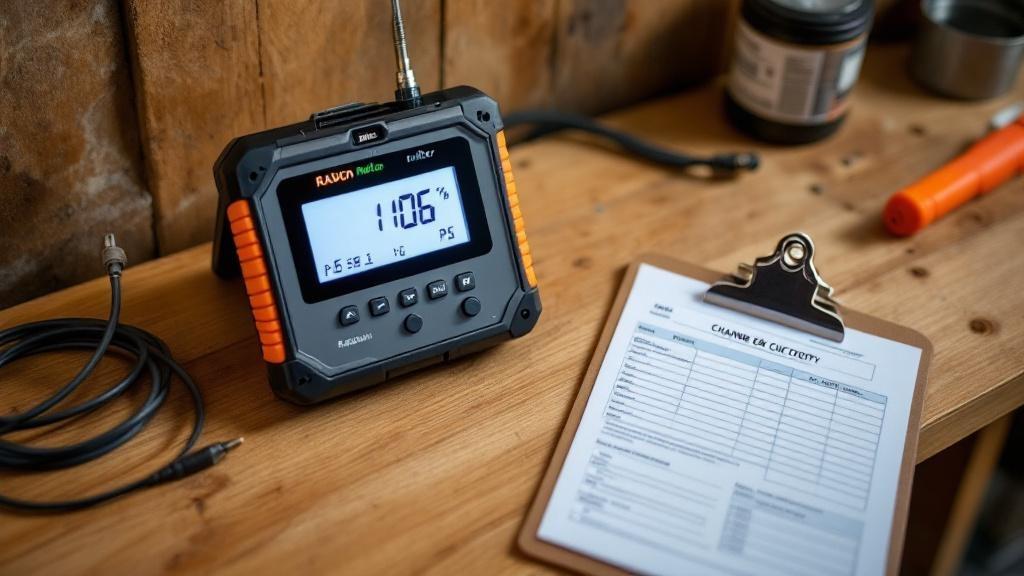
What this service covers
Testing for a purchase, a sale, a post-install check, or a plain answer about the house you live in. Minnesota licenses radon measurement professionals through MDH under Minn. Stat. 144.4961, and a professional result here comes with the device type, placement, timing and license number documented, which is what lets the number stand up in a real estate file.
Typical pricing
$150-$300
Pricing varies by job specifics. Free phone or on-site quotes; fixed pricing once the technician has assessed the job.
Short-term, long-term, and what each one answers
A short-term test, typically two to seven days with a charcoal device or a continuous monitor, answers the question a deadline asks: what is this house doing right now, under closed conditions. It is the only practical tool inside a purchase agreement, and it is the right first screen for any home that has never been tested. A long-term test, ninety days or more with an alpha-track detector, answers the question your lungs ask: what does this house average across the seasons you actually live in it.
The gap between the two matters more in Minnesota than in most states. A metro house in January is sealed tight, running its furnace, and pulling hard on the soil; the same house in July may have windows open and a reading half as high. MDH's own guidance leans on the yearly average for health decisions, which is why a borderline short-term result here is usually followed by a long-term device rather than a shrug.
Prices are friendly to curiosity. A professional short-term test runs $150 to $300, a hardware-store kit costs less than a pizza, and MDH promotes discounted kits during January, which is National Radon Action Month. For a sale, use a licensed measurement professional; Minnesota's disclosure law puts test records in front of future buyers, so the file quality matters. The comparison page sets the two side by side.
Placement and closed-house conditions in a Minnesota winter
Radon numbers are honest only when the conditions are. The device belongs on the lowest level anyone regularly uses: the basement family room in a Minneapolis four-square, the lower level of a Blaine split-entry, the walkout rec room in a Lakeville two-story. Keep it out of kitchens, bathrooms and laundry rooms, away from exterior doors and windows, off the floor, clear of heat ducts and the sump basket, and let it sit undisturbed for the full test window.
Closed-house conditions mean windows shut and doors used only for coming and going, starting at least 12 hours before a short test begins. From November through March in the Twin Cities this takes no effort at all, which is exactly why winter is testing season here. The one local wrinkle is mechanical ventilation. Many newer metro homes run heat recovery ventilators around the clock; run the HRV the way you normally live with it, and note on the report that it was running, because a test taken with the house operating abnormally describes a house nobody lives in.
Skip the start of a test when a major storm or a stretch of strong wind is forecast. Pressure swings scatter results, and a two-day delay is cheaper than a retest. When the report comes back, file it with the house papers; under Minnesota's disclosure rules, every result becomes part of the story you hand the next owner.
Reading a Twin Cities result
Minnesota results skew high, so read yours against the local base rate rather than a national one. MDH reports that about 2 in 5 Minnesota homes tested have radon at levels that pose a serious health risk, and its 2010 to 2016 statewide data put 44.1 percent of tested properties at or above 4 pCi/L, with a statewide average of 4.5. In other words, an elevated first result in this metro is the expected outcome, not an alarming surprise.
The decision bands are simple. At 4.0 pCi/L or more, the EPA says fix the home; in a real estate transaction that number usually ends the debate. Between 2 and 4, the EPA recommends considering a fix, and the smart Minnesota move is a long-term test across a heating season before spending anything, since a winter average tells you whether the short test caught a peak or a plateau. Below 2, keep the result and retest in a couple of years, after any foundation or HVAC work, or before finishing a basement.
One Twin Cities nuance: MDH's statewide average for 2010 to 2016 was 4.5 pCi/L, and individual houses scatter widely around any average, city or suburb. Averages set expectations; only your own test sets the plan. See what a result between 4 and 9 means.
Service area
Radon Testing is available across Minneapolis, St. Paul and the Twin Cities metro. Per-suburb pages: